
Mind, Body, and Whole:
How Vision Care Supports Total Well-being
Read: 4 Minutes
When you think of vision care, what comes to mind? Correcting near or farsightedness? Fixing cataracts? Reducing eye strain? Any of those would be partially correct. The benefits of vision care start with our eyes, but they extend throughout the entire body.
From uncovering signs of chronic health conditions to alleviating mental health triggers, eye care is an invaluable tool for improving total well-being. For employers, that means a more engaged, productive workforce. Read on as we delve into vision care's role in improving visual, physical, and mental health.
Eye Health: Improving Conditions, Costs, and Quality of Life
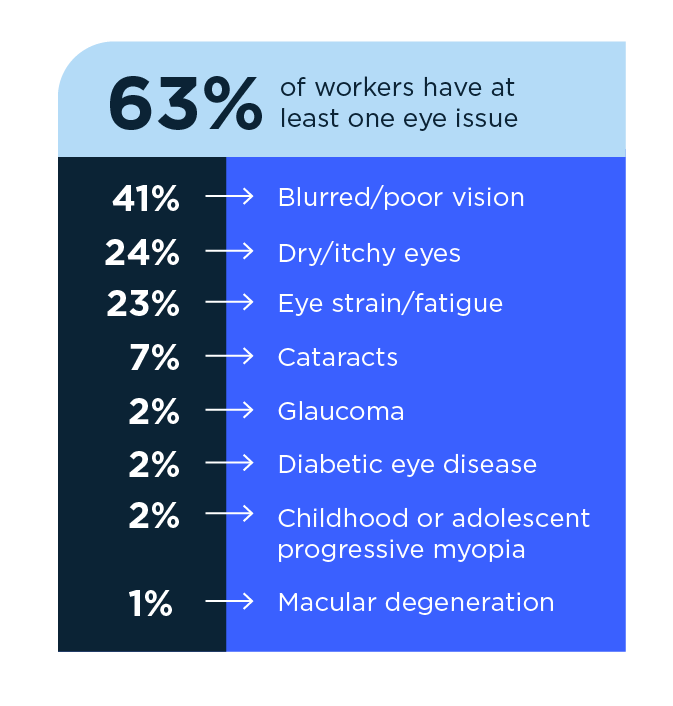
Eye issues are on the rise. In the VSP® Vision Care 2025 Workplace Vision Health Report, nearly two thirds of employees reported having at least one eye issue. That's a 50% increase in a single year.1
Personal and Professional Impacts
Surveyed employees said these eye issues negatively affect them in the workplace in three key areas:
- Productivity
- Ability to focus
- Quality of work
Outside of work, the impacts were found to be detrimental to quality of life in five fundamental areas:
- Physical health
- Mental health
- Social health
- Independence
- Financial health
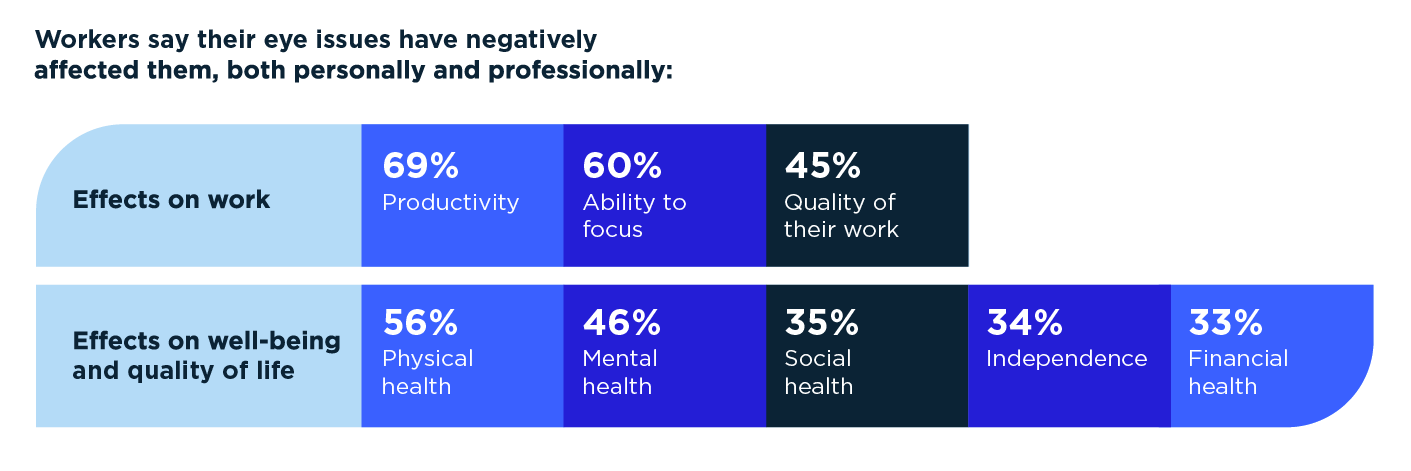
Percentage of employees who said eye issues negatively affect their home and work life in the 2025 Workplace Vision Health Report.
Another notable side-effect of eye issues in the workplace are mistakes due to poor vision and the costs to correct them. While some industries can be more forgiving of visual miscues, many others cannot. Errors stemming from poor vision can have serious—even catastrophic—results for the likes of structural engineers, medical professionals, and food inspectors.
HR Manager Fabiola Plant shares why clear vision is so important to her business, its workers, and the public.
Fabiola's message showcases the connection between vision and health from a safety perspective. But vision care's relationship with better health goes even further.
Physical Health: Detecting and Deterring Health Conditions through Eye Care
According to the Centers for Disease Control (CDC) Six in 10 Americans have at least one chronic disease, and four in 10 have two or more chronic diseases.2
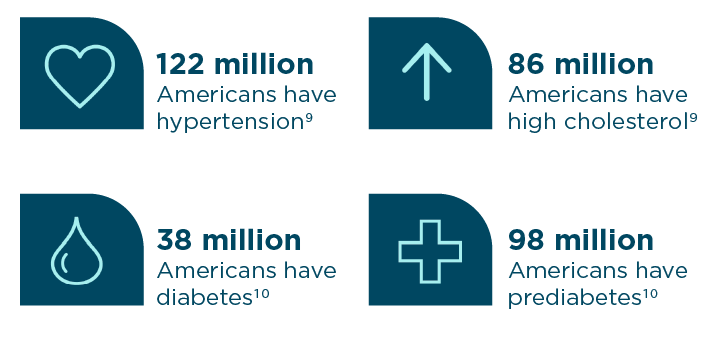
Furthermore, five of the top 10 leading causes of death in the U.S. are associated with preventable and treatable chronic diseases.2
The 10 most prevalent and costly chronic conditions according to CDC data are:
- Obesity
- Hypertension
- High cholesterol
- Coronary heart disease
- Chronic obstructive pulmonary disease
- Asthma
- Chronic kidney disease
- Diabetes
- Cancer (excluding skin cancer)
- Depression
In addition to the tolls these conditions take on people's lives, they also have significant effects on your organization in the form of higher healthcare costs, more sick time, diminished productivity, and even early retirement.
Catching these conditions early is essential. That's where vision care comes into play. Eye doctors can detect signs of more than 270 systemic conditions,3 including half of the above-mentioned chronic illnesses during a comprehensive eye exam. In fact, one out of every 10 employees surveyed say they've had an eye doctor make them aware of a non-eye-related condition.1
Early detection leads to earlier treatment, and earlier treatment can lead to better outcomes for your team members and your organization.
Mental Health: How Does Sight Influence the Psyche?
The National Institute of Mental Health estimates that 59.3 million adults in America (nearly a quarter) live with a mental illness.4
It's a staggering number, but what does it have to do with vision?
Vision and mental health are intimately connected. Loss of sight is feared more than loss of hearing, memory, speech, a limb, or contracting a deadly disease.5 Common psychological side effects related to severe vision impairment include:
- Anxiety
- Depression
- Fear
- Anger
- Social isolation6
According to the CDC, one in four adults with vision loss reported anxiety or depression. Younger adults were almost five times more likely than adults to develop serious anxiety or depression due to vision impairment.6
Workplace Impacts
As touched on previously, nearly half (46%) of survey respondents in the Workplace Vision Health report said eye issues negatively affect their mental health.1
This can surface on the job in the following forms:
- Tiredness or lack of energy
- Decreased performance and productivity
- Irritability
- Inability to focus
- Increased absence
Early identification of declining vision or serious eye conditions through a comprehensive eye exam can help prevent both from worsening, helping keep your team in a better state of mind.
The Eyes Are Windows to the Whole
As highlighted throughout this article, the eyes serve as gateways to whole-body health and wellness by helping identify and combat visual, physical and psychological issues. By providing easy access to exceptional eye care, employers pave a path for employees to be healthier, happier, and more successful. When that happens, everyone wins.
Explore More Opportunities to Improve Employee Outcomes!
Download the 2025 VSP Vision Care Workplace Vision Health report today to get more in-depth insights on employee vision, health, and benefits you can use to improve their well-being and your business' success.
Get the Insights1. 2025 Workplace Vision Health Report: Supporting Better Eye Health for Today's Workforce. Workplace Intelligence Study on behalf of VSP® Vision Care
2. Buttorff C, Ruder T, Bauman M. Multiple Chronic Conditions in the United States. Rand Corp.; 2017.
3. American Optometric Association
4. Mental Illness." National Institute of Mental Health. NIMH, September 1, 2024. https://www.nimh.nih.gov/health/statistics/mental-illness.
5. Brody, Jane E. "The Worst That Could Happen? Going Blind, People Say." New York Times, February 20, 2017. https://www.nytimes.com/2017/02/20/well/the-worst-that-could-happen-going-blind-people-say.html.
6. About Vision Loss and Mental Health." Cdc.Gov. Centers for Disease Control, May 15, 2024. https://www.cdc.gov/vision-health/about-eye-disorders/vision-loss-mental-health.html.
